

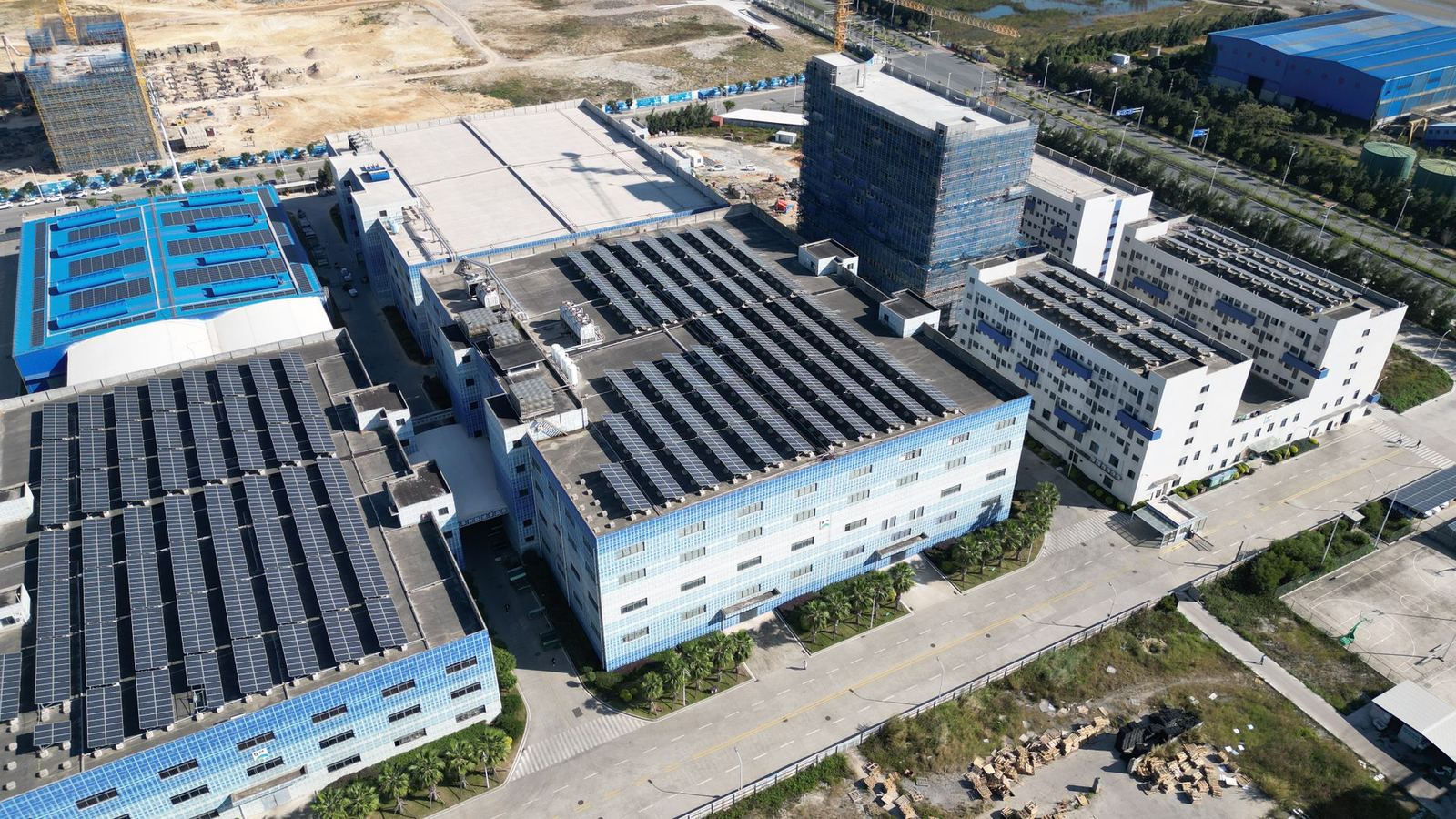
Rooftop PV that cuts your electricity bill for years: engineering design, installation, grid connection and monitoring in a single contract.
Turnkey, per kWp
Rooftop PV is the fastest way for businesses to control electricity cost. Heliora performs a structural and shading analysis of your roof and designs the best panel and inverter combination for you.
Process
- Preliminary feasibility with satellite imagery and roof measurement (48 hours)
- Structural check, shading analysis and PVsyst yield simulation
- Utility connection application and municipal permits
- Installation, testing and commissioning; delivered in 45-90 days
A typical 500 kWp rooftop plant produces about 760 MWh a year and pays back in 4-5 years. We study your consumption profile to optimize net metering and self-consumption.
Scope of service
- Preliminary quote in 48 hours with satellite imagery
- Structural and shading analysis, PVsyst simulation
- Connection application and permits included
- Delivery in 45-90 days
Rooftop PV — get a quote
Fill in the form and we will get back to you as soon as possible.
Frequently asked questions
Is my roof suitable for a PV installation?
Roofs facing south, east or west, with little shading and the structural capacity for an extra 15-20 kg/m², are suitable. We do a free preliminary assessment with satellite imagery within 48 hours and then confirm with an on-site survey.
How long is the payback period?
At current electricity prices the average is 4-5 years for industrial and commercial rooftop PV and 3-4 years for agricultural irrigation. It depends on your province, tariff, consumption profile and system cost. Our simulator gives a first estimate.
How do the panel and performance warranties work?
TOPCon modules carry a 30-year product and 30-year linear performance warranty: year 1 ≥ 99%, then at most 0.4% annual drop, year 30 ≥ 87.4%. PERC modules have a 15-year product and 25-year performance warranty. The warranty is registered by serial number.
Does the PV system work if the grid goes down?
Standard grid-connected systems shut down during an outage for safety (anti-islanding). If you want backup power, a hybrid inverter and battery system is installed; critical loads keep running during the outage.
Can I sell the surplus energy to the grid?
Under regulations, unlicensed generation facilities can feed surplus energy into the grid; net metering and sale conditions vary with regulations and the distribution company. We clarify the current conditions of your project together in the application process.