

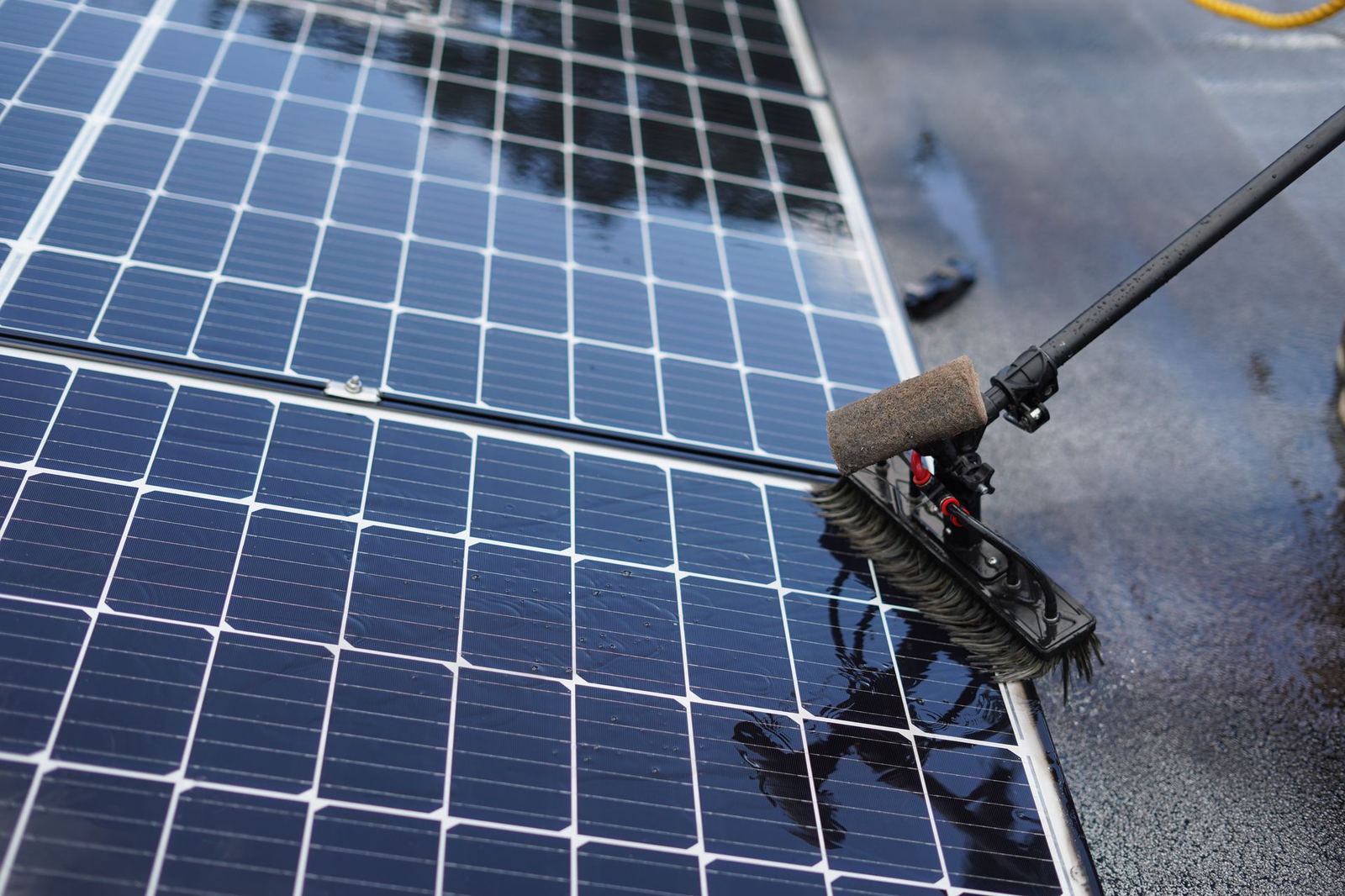
Soiling losses, the right cleaning method and thermal camera inspection.
Solar panels are referred to as maintenance-free systems, but dust, pollen, bird droppings and industrial soiling can quietly reduce production. Regular cleaning and thermal inspection preserve the investment's efficiency for 25 years.
How big are soiling losses?
The loss varies with climate and environment:
- Rainy and clean regions: 1-3% a year
- Dry, dusty inland regions (Konya, Sanliurfa): 4-8%, up to 15% in drought periods
- Farming and livestock surroundings: 5-10% from pollen, ammonia and bird droppings
- Industrial areas: An oily soot layer, 5-12%
How should cleaning be done?
- Deionized water: Hard water leaves limescale and damages the surface coating.
- Soft brush: Do not use abrasive materials or high-pressure water (above 50 bar).
- Timing: Early morning or evening; cold water shock on hot glass can cause micro-cracks.
- Safety: Roof work requires work-at-height equipment; do not walk on the panels.
How often should they be cleaned?
The general rule is 2-4 cleanings a year. The economic cleaning frequency is the point where the revenue lost to soiling equals the cleaning cost. In a 1 MWp plant, a 5% soiling loss corresponds to about 85 MWh a year, i.e. 380,000 TRY of lost production; the cleaning cost is far below this.
Thermal camera inspection
A drone-assisted thermal camera detects invisible faults such as hot spots, shorted diodes, loose connections and cracked cells. One inspection a year is recommended; the frequency can be increased in 10-year-old systems and problem strings.
Inverter and electrical maintenance
- Cleaning inverter fans and filters
- Torque check of DC cable connections and MC4 connectors
- Surge protector, fuse and earthing measurement
- Software updates
Maintenance for warranty and insurance
Many module and inverter warranties require a regular maintenance record. Annual maintenance reports are used as evidence in warranty claims. Insurers may also request a thermal inspection report and connection torque records because of fire risk.
Monitor performance
The performance ratio (PR) is the ratio of production per unit capacity to the expected value. A falling PR indicates both soiling and faults. The Heliora monitoring system measures at string level to find the problem area; in plants with O&M contracts, PR is kept above 80%.
Related Posts
Rooftop PV Design: Tilt, Orientation, Shading and Losses
Design principles for getting 10-15% more energy from the same investment.
Read More